Blogpost.
Rust Developer Web3 Opportunities in Toronto
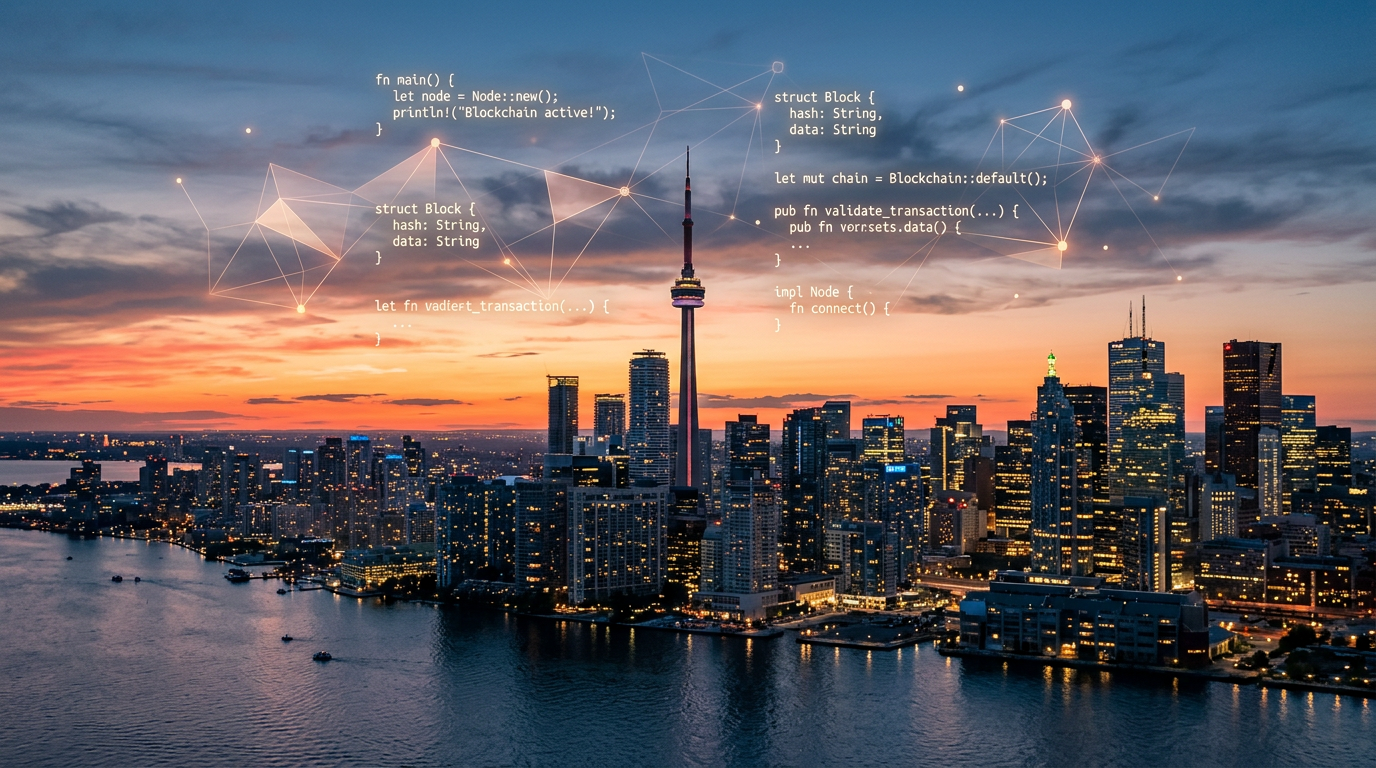

Toronto, affectionately known as 'The 6ix,' has rapidly evolved into a global titan for financial technology. As the second-largest financial hub in North America after New York, the city provides a unique intersection where traditional finance (TradFi) meets the decentralized frontier. For developers specialized in the Rust programming language, Toronto represents a goldmine of professional growth and high-impact projects. The demand for security, performance, and memory safety has positioned Rust as the language of choice for the next generation of decentralized protocols.
The city's tech ecosystem is fueled by a blend of world-class academic institutions, such as the University of Toronto, and a government that actively encourages tech migration. This combination has created a fertile ground for startups and established blockchain firms alike. If you are currently searching for Rust developer jobs, Toronto offers one of the most competitive landscapes in North America, rivaling Silicon Valley in talent density but offering a distinct Canadian flair.
Why Toronto is Canada's Web3 Epicenter
Toronto is home to several pioneers of the blockchain industry. Notably, the Ethereum Foundation was co-founded by Vitalik Buterin, who grew up in the Greater Toronto Area. This legacy has fostered a deep-seated culture of decentralization and innovation. Today, the city hosts a variety of Web3 companies ranging from Layer 1 protocol developers to DeFi platforms and NFT marketplaces. The regulatory environment for blockchain development in Canada remains relatively progressive, providing a stable framework for companies to scale without the extreme uncertainty found in other jurisdictions.
Hiring trends in Toronto show a significant shift toward 'performance-first' development. While Solidity remains popular for smart contracts on Ethereum, Rust is the powerhouse behind ecosystems like Solana, Polkadot, and NEAR—all of which have a significant presence or developer interest in the city. Large financial institutions in the downtown core are also beginning to explore private blockchain solutions and tokenization, often looking for Rust talent to build high-throughput, secure systems.
Essential Skills for Rust Developers in Toronto
To succeed in Toronto's competitive Web3 market, a Rust developer needs more than just a passing familiarity with the syntax. Companies are looking for engineers who can navigate the complexities of low-level systems programming while understanding the nuances of decentralized consensus. Key skills include:
- Memory Management and Ownership: Deep understanding of the borrow checker, lifetimes, and smart pointers.
- Substrate Framework: Since many Toronto-based projects build on Polkadot, experience with the Substrate framework is highly valued.
- Concurrent Programming: The ability to write safe, multi-threaded code to handle high-transaction loads.
- Cryptography: Understanding of zero-knowledge proofs (ZKP), elliptic curve cryptography, and hashing algorithms.
- Wasm (WebAssembly): Proficiency in compiling Rust to Wasm for efficient execution in browser-based blockchain environments.
Hiring Trends and Salary Benchmarks
The compensation for Rust developers in Toronto is among the highest in the Canadian tech sector. Because the talent pool for proficient Rust engineers is smaller than that of Java or Python, developers can command significant premiums. Currently, many local startups and international firms are listing Web3 jobs in Toronto with salaries that reflect the global nature of the industry.
- Junior Rust Developer: $90,000 – $125,000 CAD per year.
- Mid-Level Rust Developer: $130,000 – $175,000 CAD per year.
- Senior Rust Developer / Lead Engineer: $180,000 – $250,000+ CAD per year.
Beyond base salaries, many Web3 companies offer token grants or equity, which can significantly increase the total compensation package. Remote-first policies are also common, though many Toronto firms still value 'hub days' where teams meet in co-working spaces in the Entertainment District or King West.
A Cultural Note: The Diversity of Toronto’s Tech Scene
Toronto is often cited as the most multicultural city in the world. This diversity is reflected in its tech meetups and hackathons. Developers here are known for being collaborative and community-oriented. The 'Toronto Nice' attitude means that networking is generally more accessible than in more cutthroat tech hubs. Whether you are attending a crypto-mixer at a brewery in Liberty Village or a heavy-duty technical workshop at the MaRS Discovery District, you will find a community eager to share knowledge.
Local Attractions for the Toronto Developer
When you are not debugging smart contracts or optimizing memory usage, Toronto offers an incredible quality of life. Here are three must-visit spots for any developer relocating to the city:
- The Distillery District: A historic area with cobblestone streets, home to art galleries, boutiques, and excellent cafes—perfect for a weekend stroll.
- CN Tower and Ripley's Aquarium: Located in the heart of downtown, these iconic landmarks offer a reminder of the city's architectural and engineering prowess.
- High Park: A massive urban park featuring hiking trails, a lakefront, and even a small zoo, providing a much-needed green escape from the digital world.
How to Get Hired as a Rust Dev in Toronto
To stand out in Toronto's Web3 market, contribution to open-source projects is vital. Many hiring managers look at GitHub profiles to see your ability to write idiomatic Rust (often called 'idiomatic Crates'). Engaging with the local community through events like 'Toronto Rustacean' meetups or larger conferences like 'Collision' can provide the necessary connections to land a role. Additionally, having a portfolio that demonstrates your ability to build dApps or protocol-level optimizations will put you at the top of the resume pile.
As the world moves toward a decentralized future, Toronto is positioning itself as the 'Silicon Valley of the North' for Web3. For the Rust developer, there is no better time to engage with this vibrant, high-paying, and innovative ecosystem.
Frequently Asked Questions
A Rust developer in Toronto can expect to earn between $90,000 for junior roles and over $250,000 CAD for senior or lead positions, depending on experience and the specific Web3 project.
Are Web3 companies in Toronto hiring remotely?
Yes, many Web3 companies in Toronto offer remote or hybrid work models. However, some firms still maintain physical offices in areas like the Fashion District or Financial District for team collaboration.
Do I need prior blockchain experience to get a Rust job in Toronto?
While prior blockchain experience is a major asset, many companies value strong systems programming skills in Rust above all else. If you can demonstrate mastery of the language, many firms are willing to train you on the blockchain-specific aspects.
Which blockchain ecosystems are most active in Toronto?
Toronto has a very active community around Ethereum, Polkadot (Substrate), and Solana. There is also a growing interest in Cosmos and Layer 2 scaling solutions within the local startup scene.