Blogpost.
Rust Developer Jobs in Web3: Austin Career Guide
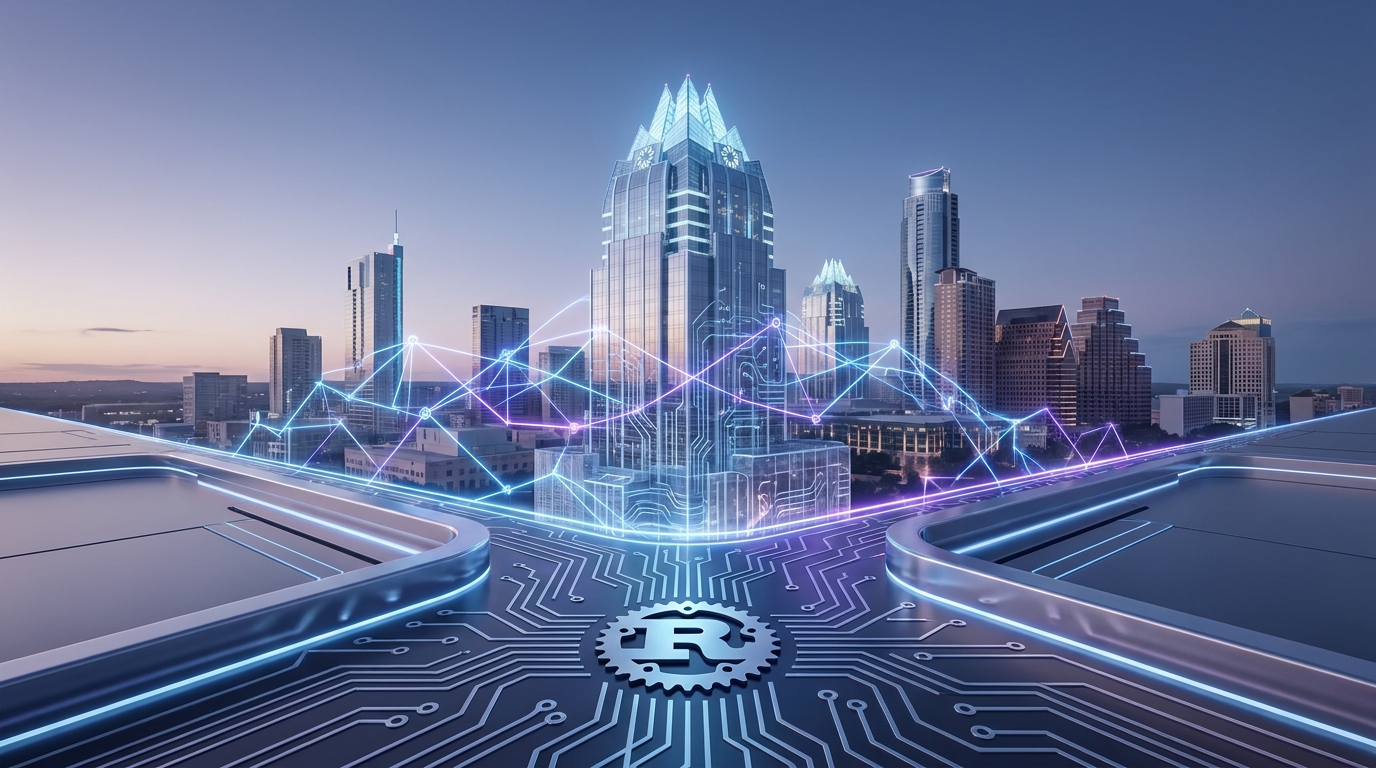

Austin, Texas, has long been known as 'Silicon Hills,' but in recent years, the city has undergone a profound transformation. What was once a stronghold for legacy hardware and enterprise software has pivoted sharply toward the decentralized frontier. For those seeking Rust developer jobs, Austin represents one of the most exciting geographic locations in the global blockchain landscape. The city combines a business-friendly environment with a high density of engineering talent, making it a natural magnet for Web3 protocols and decentralized finance (DeFi) startups.
The shift towards Rust in the blockchain space is driven by the language's unique ability to provide memory safety and high performance without a garbage collector. In an industry where a single bug can lead to the loss of millions in digital assets, the 'security-first' nature of Rust has made it the gold standard for Layer 1 and Layer 2 infrastructure. Austin-based developers are at the forefront of this movement, building everything from high-throughput smart contract platforms to zero-knowledge proof systems.
Why Rust is the Language of Choice for Austin’s Web3 Scene
In the context of the blockchain jobs in the United States, Austin stands out because of its commitment to performance-oriented engineering. While Solidity remains popular for EVM-compatible chains, the Rust ecosystem is where many of the most ambitious technological leaps are happening. Companies in Austin are increasingly building on frameworks like Substrate (Polkadot), CosmWasm (Cosmos), and especially Solana’s Sealevel runtime.
The Performance Advantage
Rust allows developers to write low-level code that rivals C++ in speed while providing safety guarantees that prevent common vulnerabilities like buffer overflows or data races. For the high-concurrency requirements of modern decentralized exchanges (DEXs) and real-time gaming applications, Rust is non-negotiable. Austin's technical community has embraced this, with local meetups and developer circles focusing heavily on Systems Programming as a foundation for Web3.
The Ecosystem Synergy
Austin is home to a unique mix of talent. You have veterans from the semiconductor industry (AMD, Intel) who understand hardware-level optimization, working alongside creative developers from the city's massive gaming sector. This synergy is perfect for Web3 development, where hardware-accelerated cryptography and immersive decentralized environments are becoming the norm.
Salary Ranges and Economic Benefits in Austin
One of the primary drivers for talent migrating to Austin is the economic landscape. Texas has no state income tax, which significantly increases the 'take-home' value of developer salaries compared to hubs like San Francisco or New York. For Rust developers in the Web3 space, the compensation packages in Austin are highly competitive.
- Junior Rust Developer: $115,000 – $145,000 per year, often with token options or equity.
- Mid-Level Rust Developer: $150,000 – $185,000 per year, plus performance bonuses.
- Senior/Staff Rust Engineer: $190,000 – $260,000+ per year, with significant leadership responsibilities.
Hiring trends suggest that companies are also moving toward 'Total Compensation' models that include remote flexibility, even for Austin-based firms. While many companies appreciate the local presence for 'whiteboarding' sessions, the Web3 culture remains fundamentally decentralized. If you are preparing for these roles, reviewing technical documentation in our knowledge base can help you stay ahead of the curve during the interview process.
Key Skills for Austin Web3 Developers
To succeed in Austin's competitive market, a Rust developer needs more than just a passing familiarity with the syntax. Hiring managers are looking for specific domain expertise that applies to the current needs of the industry.
1. Proficiency in Asynchronous Programming
Understanding Tokio and async-std is critical. Web3 applications often involve heavy I/O operations—communicating with nodes, handling peer-to-peer networking, and processing transactions in real-time. Mastery of Rust's async/await pattern is a prerequisite for most senior roles.
2. Knowledge of Zero-Knowledge Proofs (ZKP)
Privacy and scalability are the next frontiers of Web3. Familiarity with libraries like arkworks or bellman is becoming a massive differentiator. Austin has several stealth-mode startups focusing specifically on ZK-Rollups and privacy-preserving protocols.
3. Smart Contract Security
Even though Rust is safer than many languages, logic errors can still be catastrophic. Experience with formal verification, fuzzing tools (like cargo-fuzz), and writing exhaustive test suites is highly valued by Austin’s DeFi protocols.
A Cultural Note: The Austin Lifestyle
Austin isn't just a place to work; it's a lifestyle choice. The city's unofficial motto, "Keep Austin Weird," reflects its roots as an indie music and arts hub. For a developer, this means the local culture is more relaxed and eclectic than the rigid corporate environments of the East Coast. Networking often happens over BBQ or at a live music venue rather than in a formal office setting. This culture of accessibility makes it easier for newcomers to break into the local Web3 scene.
Top 3 Local Attractions for Newcomers
- Lady Bird Lake: A central reservoir where you’ll find tech workers paddleboarding or running the 10-mile trail to clear their heads after a day of debugging.
- The Texas State Capitol: An architectural marvel that serves as a reminder of the city's political and economic importance.
- South Congress (SoCo): A vibrant street filled with iconic shops, restaurants, and the famous "I love you so much" mural—perfect for a weekend stroll.
Hiring Trends: What Austin Companies Want
Currently, the Austin market is seeing a surge in 'Full-Stack Rust' requirements. This means companies want engineers who can work on the core protocol (Layer 1) but also understand how to build the CLI tools or the back-end services that interact with it. There is also a significant trend toward 'Cross-Chain' development. Developers who can bridge the gap between Solana and Ethereum or work within the Inter-Blockchain Communication (IBC) protocol are finding themselves in high demand.
Furthermore, because of Austin's history with cybersecurity, many Web3 firms are looking for developers who can integrate traditional security best practices into decentralized architectures. If you have a background in C++ and are migrating to Rust, your skills in memory management and low-level optimization will be highly transferable and respected here.
Conclusion
Austin offers a rare combination of high-paying career opportunities, a burgeoning Web3 ecosystem, and an unmatched quality of life. For Rust developers, the city provides a fertile ground to build the future of the internet. Whether you are working for a major protocol or a niche DeFi startup, the Austin tech community is ready to welcome the next generation of blockchain innovators.
Frequently Asked Questions
Absolutely. Austin has become a primary hub for blockchain technology in the US, offering high salaries, no state income tax, and a vibrant community of developers and startups.
What is the average salary for a Rust developer in Austin?
Web3 Rust developers in Austin typically earn between $130,000 and $220,000, depending on experience, with senior roles often exceeding $250,000 when including token incentives.
Which blockchain protocols are popular in the Austin tech scene?
There is a strong focus on Solana, Polkadot, and Cosmos in Austin, though many developers also work on Ethereum Layer 2 solutions and Bitcoin-centric projects like Stacks.
Do I need to live in Austin to work for an Austin-based Web3 company?
While many companies offer remote-first policies, many local firms prefer a 'hybrid' approach or value developers who can attend local meetups and networking events in person.